Meme Coin Trading, A Practical Walkthrough of the Fomo App Workflow
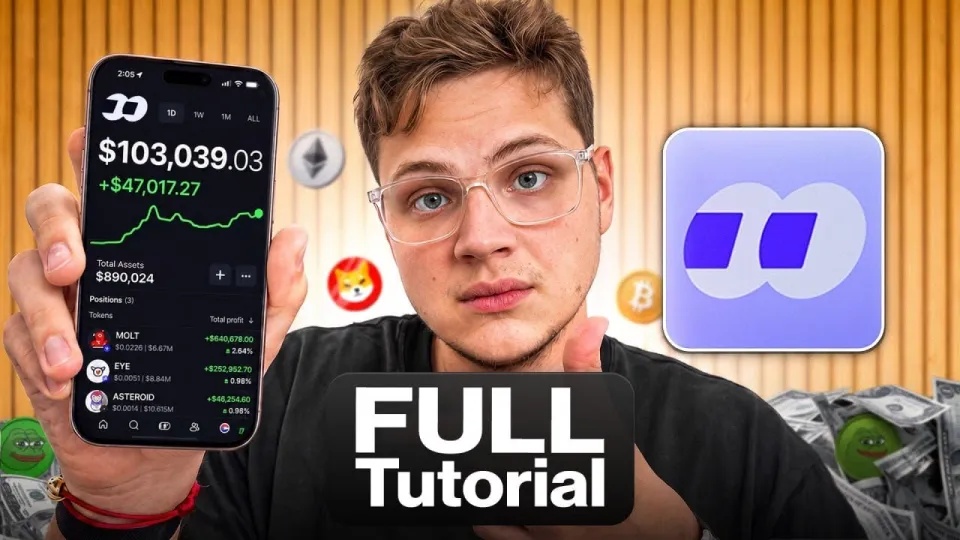
Video: How To Make Money Trading Memecoins (fomo app tutorial)
Need articles like this for your video? They help promote it on YouTube and Google — order them in the Telegram bot @sat_sit_bot. Articles with your video embedded are written and posted by the bot itself — on popular topical sites (no ads). Your first 50 articles are free.
Meme coin trading is the practice of buying and selling highly volatile tokens whose price depends on attention, liquidity and holder behaviour rather than revenue or earnings. It can be profitable, but the edge comes from process — position sizing, execution speed and exit discipline — not from picking the next 100x. The Fomo app, available via the Fomo registration link, is one interface built specifically for this kind of fast trading, and the Orangie Web3 walkthrough shows how the workflow fits together.
What a meme coin actually is and why it moves so fast
A meme coin is a token with no product behind it, priced purely by supply, demand and narrative, which is why a single viral post can move it 300% in an hour and a single large seller can erase the same amount. Classic examples such as Dogecoin started as jokes; the current generation launches on Solana in minutes through platforms that let anyone mint a token and seed a liquidity pool. Because there is no earnings report or roadmap to anchor valuation, price discovery happens on social feeds, and the token's entire market cap can be a few thousand dollars at launch.
That structure produces two consequences traders must accept. First, liquidity is thin: a $5,000 sell order can move the price of a small-cap meme coin by double digits, so slippage is a real cost, not a rounding error. Second, the distribution of outcomes is extremely skewed — a handful of tokens produce most of the gains while the majority trend toward zero. Any strategy that assumes every trade works is mathematically doomed.
Inside the Fomo app workflow
The Fomo app is a trading front end that bundles token discovery, charting and order execution for meme coins, with social features such as copy-trading and shared feeds layered on top. Signing up through the referral link gives access to the platform and its community tools; from there the practical sequence looks like this:
- Create or connect a wallet and fund it with the chain's native token — on Solana that means SOL, which pays gas and can be swapped directly.
- Browse trending or newly launched tokens rather than searching blindly; volume and holder counts are the first filters.
- Check liquidity and holder distribution before buying: a pool under roughly $20,000 or a single wallet holding a large share of supply is a red flag.
- Set the trade size in advance, execute, and define the exit before the chart moves — a target multiple and a hard stop.
- Track the position and take partial profits rather than waiting for a number that may never print.
Execution speed matters because meme coin moves are measured in seconds, but speed without a plan just means losing money faster. The app's copy-trading feature is the part that deserves the most caution, and it gets its own section below.
The copy-trading trap most beginners fall into
Copy-trading looks like the simplest path into meme coins — follow a profitable wallet and mirror its buys — but the structure of the game puts followers last in line. Experienced traders frequently buy a token on a separate wallet before buying on the wallet their followers watch, so the price has already moved by the time a mirrored order lands. Followers become the exit liquidity for the trade they are copying.
There is a second, quieter problem: you inherit someone else's risk profile without knowing their position size, their cost basis or their plan. A trader who risks 0.5% of a large portfolio per trade can afford ten consecutive losses; a beginner mirroring the same trades with 20% of a small account cannot. If you use copy-trading at all, treat it as a source of ideas to research, not as an execution strategy, and always size the trade yourself.
Position sizing and risk rules that keep you in the game
Risk management is the only part of meme coin trading that is fully under your control, and it is what separates traders who survive a bad month from those who lose the wallet. A workable framework for a speculative account:
- Cap each individual trade at 1–2% of total capital; at that size, ten straight losses cost roughly 10–20%, which is recoverable.
- Decide the exit before entering: for example, sell half at 2x and let the remainder run, and accept a total loss on the position if the thesis breaks.
- Never add to a losing meme coin position; averaging down on an illiquid token usually means buying more of something nobody else wants.
- Keep a separate, untouched wallet for savings and never fund trading from money needed for expenses.
- Log every trade with entry, exit and reason, because memory flatters results and a written record does not.
One viewer of the Orangie Web3 video described getting a wallet drained, reloading with about $90, making roughly $30 and then giving it back — a realistic sequence that illustrates why sizing and a stop rule matter more than a single good call.
Common questions from new traders
Newcomers tend to hit the same obstacles in the first weeks, and most of them are operational rather than analytical. Price alerts are the most requested feature: without them, a position can round-trip while you are away from the screen, so traders either set manual alerts on a charting tool or check positions at fixed intervals. Mobile execution is another recurring theme — the workflow is built for a phone, and desktop habits do not always translate.
Scam anxiety is the third big one. Rug pulls, where the deployer removes liquidity, and honeypots, where selling is disabled, are common on permissionless launchpads. Basic checks — liquidity locked or burned, mint authority revoked, holder concentration — filter out a large share of them, though nothing eliminates the risk. Finally, many beginners ask whether coaching or structured learning exists; the honest answer is that the fastest progress comes from trading tiny size while documenting what happened, then reviewing the log weekly.
Useful links
- Fomo trading platform (registration and referral access): https://fomo.family/r/orangie
- Orangie Web3 Discord community for meme coin discussion: https://discord.gg/memecoins
- Orangie on Instagram: https://www.instagram.com/orangieyt/
Bottom line
Meme coin trading is a fast, adversarial market where the token is the product and attention is the fundamental, so treat every position as a lottery ticket you have already decided how to lose. The Fomo app streamlines discovery and execution, but the edge still comes from checking liquidity and holder distribution, refusing to blindly copy large wallets, and sizing trades so a losing streak cannot end your account. Start small, keep a written log, and expect most trades to fail — the occasional winner has to be large enough to pay for all of them. The Orangie Web3 channel walks through this workflow step by step and is a sensible starting point before risking real capital. If you want to follow along in the same interface, begin with the Fomo sign-up link and fund it with an amount you are comfortable losing entirely.
Key takeaways
- Meme coins are high-volatility tokens whose price is driven almost entirely by attention, liquidity and holder behaviour rather than cash flow or earnings.
- The Fomo app (fomo.family) is a trading interface built for fast meme coin execution, with copy-trading and social feeds built in.
- Copy-trading is the biggest trap for beginners: large traders often buy on a separate wallet first, so followers enter at a worse price.
- Most meme coin activity sits on Solana, where transaction fees are fractions of a cent but failed transactions and scams are common.
- Position sizing matters more than entry timing: risking 1–2% of a portfolio per trade keeps a string of losses survivable.
Questions & answers
Is meme coin trading actually profitable for beginners?
For most beginners it is not profitable at first, because the market is adversarial and the majority of tokens lose value. Profitability comes from asymmetric outcomes — many small losses offset by a few large wins — which requires strict position sizing and the discipline to take profits. Treat the first months as paid education with deliberately tiny trade sizes.
Why is copy-trading on meme coins risky?
Copy-trading puts you behind the wallet you follow, because large traders often buy on a separate account before buying on the wallet their followers can see. By the time a mirrored order executes, the price has already moved and you may be providing exit liquidity. It is safer to use copied trades as research ideas and size positions yourself.
How much should I risk on a single meme coin?
A common rule is 1–2% of total trading capital per position, which keeps a run of ten losses survivable at roughly 10–20% of the account. Meme coins can go to zero, so only use money you can lose entirely and keep savings in a separate wallet that never touches trading.
What should I check before buying a new Solana meme coin?
Check liquidity in the pool, holder concentration, whether mint authority is revoked and whether liquidity is locked or burned. Thin liquidity means heavy slippage on exit, and a single wallet holding a large share of supply can dump on you. These checks filter many scams but do not eliminate the risk.
Source: How To Make Money Trading Memecoins (fomo app tutorial) · Markdown version